

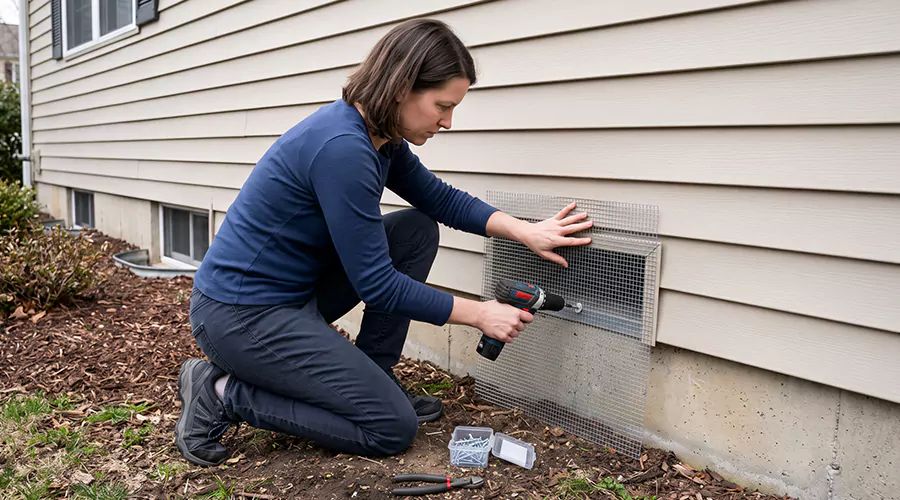
To prevent rodents from entering air ducts, seal exterior entry points, repair damaged duct connections, protect vulnerable openings with suitable rodent-resistant materials, and eliminate nearby food, water, and nesting sources. If rodents have already entered the HVAC system, professional pest removal and an inspection of the affected ductwork should take place before contaminated sections are cleaned or replaced. Professional air duct installation can help replace damaged duct sections and restore properly connected ventilation pathways when repairs are no longer sufficient.
Mice and rats can enter buildings through surprisingly small openings. Once inside an attic, basement, or crawlspace, they may find access to damaged HVAC ducts or gaps around equipment connections. Rodents can damage flexible ductwork, contaminate accessible passages with droppings and nesting material, and create unpleasant odors. These problems can affect household hygiene and HVAC performance. Preventing an infestation requires more than blocking one visible hole. Homeowners should identify how pests enter the building, correct damaged ducts, and remove conditions that attract them.
How Do Rodents Get Into HVAC Air Ducts?
Rodents may reach ductwork through damaged flexible ducts, disconnected joints, open equipment access panels, or gaps around duct connections. They can also enter attics and crawlspaces through building-envelope openings before chewing or moving through vulnerable duct materials. The Environmental Protection Agency (EPA) explains that mice can squeeze through openings approximately one-quarter inch wide.
Common access locations include utility penetrations, foundation gaps, damaged exterior vents, and openings around pipes. A loose room register does not necessarily mean rodents are entering through the grille. The opening may be somewhere farther along the duct or in the surrounding building cavity.
What Are the Signs of Rodents in Air Ducts?
Rodent activity may produce several warning signs.
| Warning Sign | Possible Explanation |
|---|---|
| Scratching inside walls or ceilings | Rodents moving near ductwork |
| Droppings around accessible openings | Possible pest activity |
| Strong, unpleasant odor | Urine, nesting material, or dead animals |
| Torn flexible duct insulation | Chewing or physical damage |
| Shredded nesting materials | Possible nesting nearby |
| Unusual noises at night | Rodent movement |
| Visible gaps or disconnected ducts | Potential entry pathway |
| Repeated infestation after treatment | Entry points remain open |
These observations do not always prove the animals are inside the ducts. A pest professional can establish where activity is occurring.
1. Inspect the Exterior of Your Home
Begin by checking areas where rodents can enter the building. Inspect the foundation, siding, utility penetrations, roof edges, and openings around pipes or cables. The EPA recommends closing holes inside and outside buildings to prevent infestations.
Pay particular attention to connections between ducts and walls, ceilings, or floors. Avoid entering unsafe crawlspaces or attics. Professional inspection is appropriate when suspected entry points are concealed.
2. Seal Small Holes With Rodent-Resistant Materials
Rodents can chew through many soft building materials. The EPA's pest-entry guidance recommends using corrosion-resistant copper or stainless steel mesh to close small openings. Metal flashing and other durable materials may also be appropriate. Ordinary expanding foam alone may not provide a lasting rodent barrier.
Seal the opening using materials suitable for its location and any applicable fire-rating requirements. Do not block intended ventilation openings or interfere with combustion-air requirements.
3. Repair Damaged Air Ducts
Rodents may enter ducts through torn flexible liners, open seams, or disconnected branches. An HVAC contractor should inspect damaged sections and determine whether they can be repaired or need replacement. Disconnected ducts require secure mechanical connections and appropriate sealing.
ENERGY STAR recommends approved HVAC mastic or suitable metal tape for accessible duct joints. Sealing air leaks helps close unintended openings, but it does not replace the need for pest-proofing the surrounding building.
4. Protect Vulnerable Exterior Openings
Exterior vents and utility openings should have their intended protective covers in good condition. Replace damaged grilles, louvers, or pest guards with products appropriate for the specific opening. Do not install improvised fine-mesh screens over HVAC intake or exhaust outlets without confirming that the equipment permits them.
Some exhaust systems, including clothes dryer vents, must not have screens that trap lint. A qualified contractor can select protection that discourages pests without restricting required airflow.
5. Remove Food and Water Sources
Rodents are attracted to accessible food, water, and shelter. The EPA recommends keeping garbage in tightly closed containers, cleaning spilled food, and managing potential outdoor food sources. Store pet food and birdseed in durable sealed containers.
Repair plumbing leaks and eliminate standing water around the foundation. These actions reduce the conditions that encourage rodents to remain near the house.
6. Maintain Attics and Crawlspaces
Attics and crawlspaces provide sheltered routes for rodents to reach HVAC ducts. Inspect these spaces for damaged ductwork, nesting material, and openings around building services. Avoid placing heavy storage items on flexible ducts because compression and tearing can create additional problems.
Remove unnecessary clutter where safely possible. A pest professional can determine whether exclusion repairs are needed before an infestation spreads.
7. Maintain HVAC Filters and Equipment Panels
A properly fitted HVAC filter helps collect airborne particles, but it is not a physical barrier against rodents. Inspect filters regularly and replace them according to the equipment manufacturer's instructions. Make sure equipment access panels are properly closed after maintenance.
Gaps around air handlers and return connections should be repaired using appropriate HVAC materials. Do not install extra mesh or homemade barriers inside the equipment because these may interfere with airflow.
What Should You Do if Rodents Are Already in the Ducts?
The Centers for Disease Control and Prevention (CDC) recommends contacting a professional rodent extermination service when there is evidence that rodents have accessed heating and cooling ventilation systems. Professional air duct deep cleaning can help remove accumulated dust and debris from affected ductwork after rodent activity has been addressed and an inspection confirms that cleaning is appropriate.
Arrange an assessment of the infestation and consider limiting HVAC operation in affected areas until a qualified professional has evaluated possible contamination. Do not sweep or vacuum dry rodent droppings or nesting material. The CDC warns that these activities can release contaminated particles into the air. Professional cleanup should use precautions appropriate to the level of contamination.
Should You Use Rodent Poison Inside Air Ducts?
No. Do not place loose poison, bait, or improvised pest-control chemicals inside HVAC air passages. These substances can introduce additional hazards and may leave dead animals in inaccessible locations. A licensed pest-control professional can recommend an appropriate management plan that addresses the infestation without contaminating the ventilation system. Chemical products should only be used according to their labels and applicable regulations.
Do You Need Air Duct Cleaning After Rodent Removal?
Cleaning may be appropriate when rodents have contaminated the duct network. The EPA identifies vermin infestation as a condition that can justify professional air duct cleaning. The pest activity and entry points should be addressed first so contamination does not return.
A qualified contractor should assess whether affected duct surfaces can be safely cleaned. Damaged or heavily contaminated porous materials may require replacement. Ask how the company will contain debris and prevent contaminants from entering occupied rooms during the work.
How Can You Keep Rodents Out Permanently?
No single repair guarantees that rodents will never return. A prevention plan combines durable exclusion materials, regular property maintenance, food-source control, and timely duct repairs.
After an infestation, recheck previously damaged areas and monitor for new signs of activity. The goal is to remove access and attractants rather than depend on repeated chemical treatment.
Conclusion
Preventing rodents from entering air ducts starts with closing building entry points and keeping the HVAC distribution system properly connected. Repair damaged ducts, use durable rodent-resistant materials where appropriate, and eliminate food and water sources near the home. If an infestation is present, involve pest-control and HVAC professionals before attempting duct cleanup. Correcting the entry pathways is necessary to reduce the likelihood of recurring contamination.